
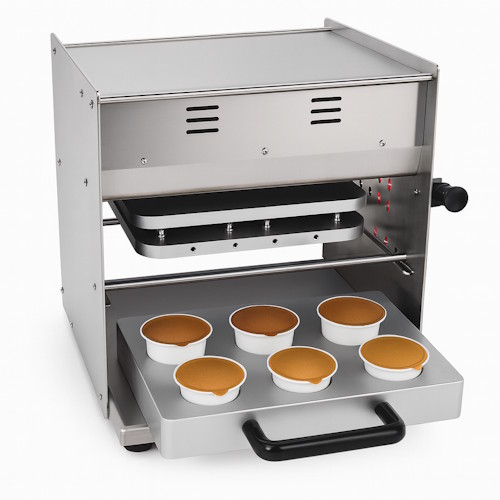
DIY and Small-Batch K-Cup Production
Not every coffee roaster needs an industrial line to explore K-Cup® production.
For home roasters and microbrands, buying empty K-Cup pods and using small-scale
sealers can be an affordable way to test the market. This guide explains the options and links to
a separate DIY K-Cup Supplier List.
Empty K-Cup Pods for Sale
Several suppliers sell empty, ready-to-fill K-Cups with or without filters attached.
Pods are available in standard, recyclable, and compostable formats, often with compatible lids and packaging. Buying unfilled pods lets you test your own coffee in pod form without a large equipment investment. See our DIY K-Cup Supplier List to find sources.
Manual Filling and Sealing
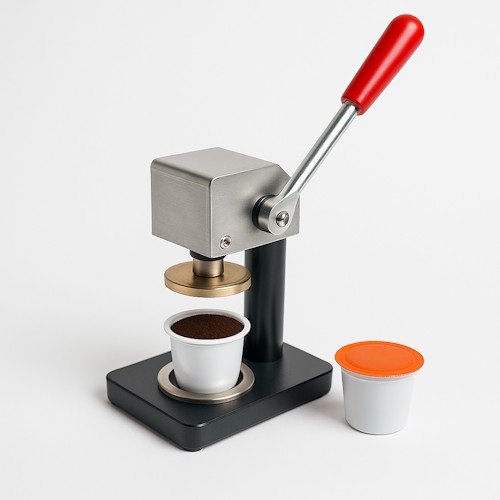
Filling pods by hand and sealing them with a compact device is practical for small batches. Desktop sealers can handle dozens of pods per hour; consumer-friendly kits and reusable cups are available for hobbyists or ultra-small runs. This approach favors freshness and flexibility over long shelf life.
Cost Considerations
The cost of making your own K-Cups depends on coffee prices, the type of empty pods and lids you purchase, shipping, and any tariffs on imported materials. DIY pods are often less expensive per unit than retail-branded K-Cups because you are not paying for distribution and marketing. The larger advantage is control and flexibility: you can experiment without committing to industrial machinery.
Shelf Life and Freshness
One limitation of manually filled K-Cups is shelf life. Commercial lines use nitrogen flushing and sometimes vacuum sealing to reduce oxygen and protect flavor for months. Without that equipment, DIY pods are best within a few weeks of filling. As volumes grow, consider co-packing or machines with nitrogen capability to extend shelf stability.
Who This Is For
- Home roasters testing how their coffee performs in a single-serve format.
- Micro-roasters or market sellers trialing a branded K-Cup line.
- Cafés offering small runs of branded pods as an add-on for customers.
When to Scale Up
If demand grows, moving from manual sealing to an entry-level machine or a
contract packer improves consistency and throughput. For manufacturers, co-packers,
and consumable suppliers, see our main K-Cup Production Directory.
Next Steps
Start small, measure response, and iterate. As your audience grows, you can transition to co-packing or automated lines with confidence.